Tag: photography preservation

Conservation Framing for Photography: How to Protect and Display Prints

A beautifully framed photograph can still be vulnerable behind the glass. Conservation framing for photography is not about choosing a prestigious-sounding material. It means making considered choices that help reduce avoidable risks to the print.

If you’re unsure whether a mat is necessary, what “archival” really means, or whether framing might harm a photograph you value, those are sensible questions. Suitable materials and construction can help protect a print, but no frame can shield it from every threat, particularly unsuitable display conditions.

This guide explains what conservation framing can and can’t do, how glazing, mats, backing, and mounting methods affect a photograph, and what to ask before approving a frame. You’ll also learn why clear, verifiable material specifications matter more than vague marketing language, and how to display a print with care while preserving its visual presence. With a little knowledge, you can make the frame a considered part of the photograph’s presentation, not a source of uncertainty.

Key Takeaways

  • Conservation framing for photography can reduce avoidable risks to a print, but it can’t prevent every kind of deterioration.
  • Glazing, mats, spacers, mounting, and backing work together. The photograph’s process can affect which materials are suitable.
  • UV-filtering glazing helps, but it isn’t a substitute for physical separation, compatible materials, and thoughtful display conditions.
  • Before commissioning a frame, identify the print and its condition, explain where it will hang, and ask specific questions about materials and construction.
  • Careful placement and handling remain important after framing, especially away from direct sunlight, persistent heat, and damp.

What Is Conservation Framing for Photography, and What Can It Protect?

Conservation framing for photography means choosing materials and construction methods intended to reduce avoidable risks to a photographic print. A suitable frame can help limit contact with the print’s surface and reduce unnecessary handling, as well as moderate exposure to some environmental hazards. It can’t prevent every kind of deterioration. Light, fluctuating conditions, and the natural ageing of photographic materials may still affect an image over time.

Conservation framing helps reduce preventable risks to a photograph; it cannot promise that the print will remain unchanged forever. The frame itself can also age or be affected by its surroundings. For a broader perspective on why frames need care, see Conservation and restoration of painting frames, which discusses deterioration factors such as humidity, pests, and adhesives. Caring for the frame, however, is distinct from protecting the photograph inside it.

Framing is preventive, not restorative. If a print is already faded, stained, creased, or otherwise damaged, a new frame won’t reverse its condition. Treatment may require examination by a qualified photograph conservator, who can assess the image and recommend appropriate next steps. Don’t attempt repairs or remove adhered materials without expert guidance.

Which photographic prints may need extra care?

A contemporary print in good condition may call for different decisions from a historic, rare, irreplaceable, or visibly fragile photograph. With an older print, both its photographic process and its present condition can affect which materials are suitable. Yellowing, flaking, tears, or evidence of previous repairs are reasons to seek specialist advice before framing. If a photograph is valuable or historically significant, consult a photograph conservator or a framer experienced with photographs before making changes.

Does every photograph need conservation framing?

No single framing approach suits every print. The right choices depend on the photograph’s process and condition, its personal or financial importance, where it will be displayed, and the conditions around it. A print intended for a bright room may raise different concerns from one kept in a quieter, more stable setting. The aim is informed care, not alarm or unnecessary expense.

Think of framing as part of the photograph’s presentation. It can support the image visually while helping you make thoughtful decisions about its care. For ideas on bringing photographic art into a home, explore fine art photography collecting and decorating. Next, consider how each component of the frame interacts with the print.

How Conservation Framing Materials Interact with a Photographic Print

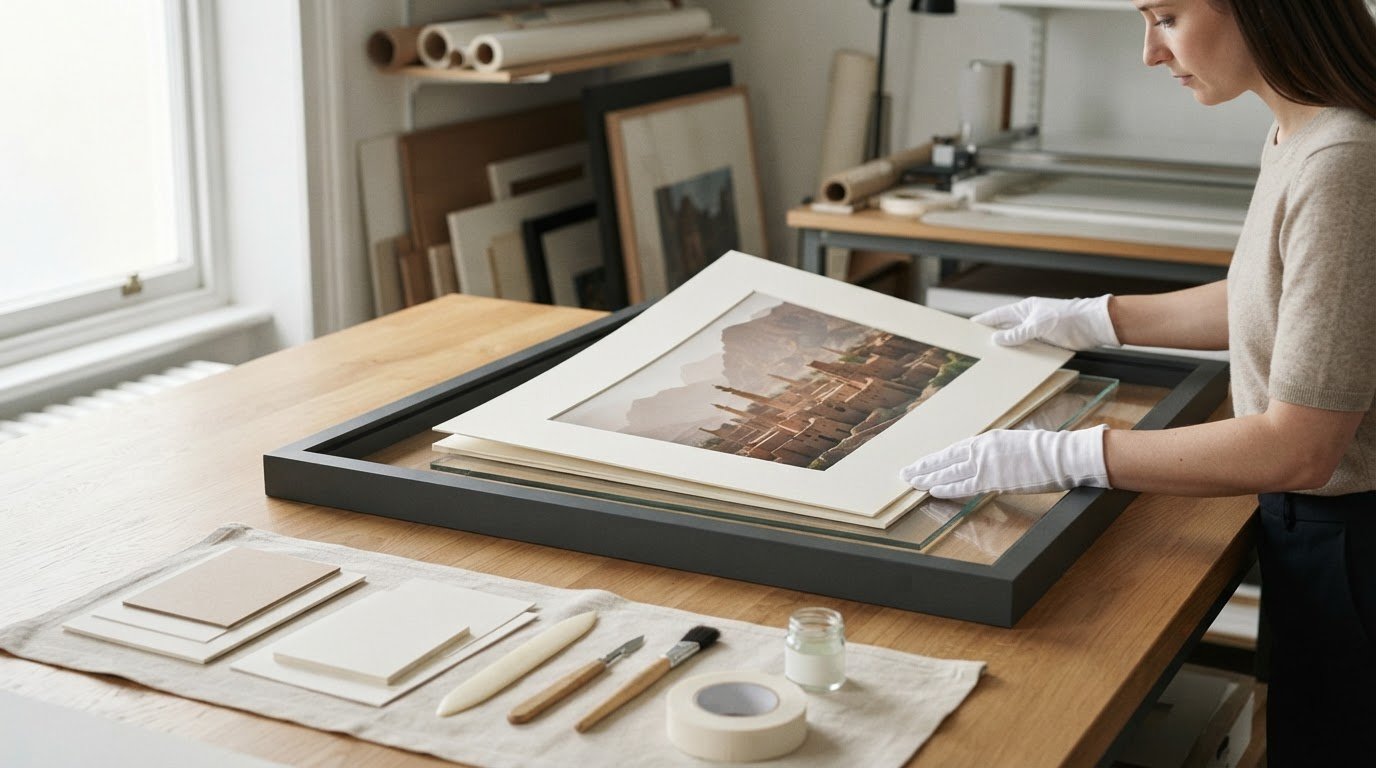
A framed photograph is a small, interconnected system. Glazing faces the image; a window mat or spacers create distance; the mount supports the print; backing sits behind it; and the frame holds the assembly together. Each part can affect the print through contact, pressure, or the environment inside the frame. Every layer that touches or encloses a print can affect how it’s cared for.

Choose materials for the photograph’s process, not just a label on the board. “Acid-free” describes a useful property, but on its own it doesn’t identify the material’s composition, test results, or suitability for a particular print. Ask what the mat, mount, and backing are made from, and whether their suitability for photographs can be documented. For prints within its scope, the Photographic Activity Test (PAT) is associated with ISO 18916; ISO 18902 sets requirements for materials used in framing and storing photographs. The Caring for Photographs guide from the American Institute for Conservation offers further guidance on handling and care.

Some photographic processes need particular consideration. Buffered boards, for example, aren’t suitable for every process; cyanotypes can be damaged by buffered materials. If the process is unknown, or the print is sensitive or historic, ask a qualified framer to assess which materials are appropriate. Don’t assume one board works for every photograph.

What should you ask about mats, mounts, and backing?

Start with the points of contact: what materials touch the print, and how is it held in place? Ask whether the mounting method is reversible, meaning the photograph can be removed later without damage. Non-adhesive supports may be appropriate, but the method should suit the print’s condition and format. A properly designed window mat or spacers can keep the image surface from resting directly against the glazing, helping reduce the risk of sticking or moisture-related contact.

Ask for specific material descriptions rather than relying on terms such as “museum quality.” For a delicate or historically important photograph, a qualified framer or photograph conservator can help assess the print and advise on the assembly.

What does UV-filtering glazing do, and not do?

UV-filtering glazing can reduce some ultraviolet exposure, but the degree of protection depends on the product and its stated specification. Ask which wavelengths it filters and request the manufacturer’s information. It won’t remove all fading risks: visible light, display conditions, and handling still matter. UV protection is one element of the framing system, not a substitute for suitable materials, separation from the glass, or thoughtful placement.

If you’re considering framing a purchased print, Galerie Prints offers a bespoke framing service. You can explore framing options and confirm the glazing, mounting, and backing specifications before choosing.

Conservation Framing Misconceptions: Is UV Glass Enough?

No. UV-filtering glazing can reduce some ultraviolet exposure, but it doesn’t make a photograph invulnerable. It can’t control every source of light or prevent heat and moisture from affecting the print. Nor can it compensate for unsuitable materials inside the frame. A more complete approach considers the whole assembly, the print’s condition, and where it will be displayed.

Think of each measure as addressing a different risk. The details below are a starting point, not a specification for every photograph. Confirm exact materials and performance claims with the framer or manufacturer, especially for a sensitive or historic print.

  • UV-filtering glazing: Reduces some ultraviolet exposure. Performance varies by product, and it doesn’t block all potentially damaging light.
  • A mat or spacers: Helps keep the print’s surface from touching the glazing. It doesn’t prevent fading or make unsuitable materials safe.
  • Compatible mount and backing: Helps avoid harmful contact and supports the print. Suitability depends on the photograph and its process.
  • Careful handling: Reduces risks from fingerprints, pressure, and accidental damage. It can’t reverse existing deterioration.
  • Thoughtful placement: Limits exposure to direct light, heat, moisture, and pollutants. Conditions can still change over time.

Can conservation framing prevent fading?

It may reduce some risks, but no framing choice can guarantee that a photographic print won’t change. Light exposure can affect colour stability, while the print’s materials and process also influence how it ages. Even glazing that filters ultraviolet light doesn’t eliminate exposure to visible light. Avoid direct sun and consider the room’s heat and moisture conditions. For advice tailored to a particular process, ask a photograph conservator rather than relying on a general lifespan estimate.

When is professional conservation advice worthwhile?

Routine framing of a replaceable contemporary print is different from making treatment decisions about a unique original. If a photograph is fragile, damaged, historically significant, or irreplaceable, seek specialist assessment before framing or attempting repairs. Ask a framer about their experience with photographic materials specifically; expertise with frames or other kinds of artwork doesn’t automatically mean familiarity with photographs. A conservator can assess the print and identify risks that may not be visible at a glance.

The aim of conservation framing for photography isn’t to promise permanence. It’s to make considered choices that reduce avoidable risks. A well-chosen frame is one part of that care, alongside appropriate handling and a suitable display location.

How to Commission Conservation Framing for a Photograph

A useful framing conversation begins with the photograph, not a frame sample. Share what you know about the print and where you plan to display it, then ask the framer to explain how the proposed construction addresses those circumstances. This checklist can help you compare options without relying on broad labels such as “archival” alone.

  1. Identify the print and its importance. Note its dimensions, any known photographic process or provenance, and visible concerns such as fading, tears, or surface damage. Explain whether it’s a replaceable print, a limited print, a historic photograph, or otherwise especially meaningful to you.
  2. Describe the intended location. Tell the framer which room you have in mind and whether the photograph may face direct sunlight or be near a heat source, damp area, or changing conditions. The display environment can help shape practical choices.
  3. Ask for the material details. What are the glazing, mat, mount, and backing made from? Which materials will touch the print, and how will the glazing be kept from contacting its surface? Ask for specific product or material information where available.
  4. Clarify how the print is held. Ask whether the attachment method is reversible and whether the photograph can be removed later without damage. If the process or condition is uncertain, ask what the framer can verify and what remains unknown.
  5. Record the agreed specifications. Keep a written note of the chosen materials, glazing description, mounting method, and any care advice. For a fragile, damaged, unique, or historically significant photograph, consult a qualified photograph conservator before proceeding.

What information should you bring to a framer?

Bring the print’s dimensions, known process or provenance, condition concerns, and intended display location. Share what you know about the photograph’s history, but don’t guess at details you can’t confirm. Tell the framer why the print matters to you, then ask for material choices to be explained in plain language. If a specification can’t be verified, ask that this uncertainty be made clear before you approve the design.

How should you assess the finished frame and its placement?

Before hanging the work, check the frame for signs of pressure, damage, or movement. Ask the framer to confirm that the print is securely supported and separated from the glazing. Choose a position away from direct sunlight and locations exposed to persistent heat or moisture changes. If you’re considering a monochrome work, black-and-white photography collecting offers further inspiration for displaying it thoughtfully.

Galerie Prints offers bespoke framing as an add-on for purchased prints. To explore the option, view the bespoke framing service, and confirm the materials and construction details that matter for your photograph.

Displaying and Caring for a Conserved Photograph Over Time

Conservation framing for photography works best alongside thoughtful display and careful handling. A well-considered frame can help reduce certain risks, but the photograph’s surroundings still matter. Choose a stable interior location away from direct sunlight, persistent heat, damp, and rapid changes in room conditions.

How can you reduce avoidable display risks?

Check the room throughout the day and across seasons. A wall that seems shaded in winter may receive strong sunlight later in the year. Bathrooms and kitchens can have fluctuating moisture, while radiators and fireplaces create heat. Keep framed photographs away from these conditions where possible, and avoid leaning objects against the glazing or stacking frames where pressure could affect the print.

For routine dusting, use a soft, dry cloth on the frame’s exterior. Don’t spray cleaner onto the glazing, where liquid could run into the edges, and don’t open the frame to clean or adjust the photograph. If the glazing needs more than light dusting, follow the framer’s care guidance for that specific frame and surface.

Once you’ve chosen a suitable place and established a gentle care routine, explore Galerie Prints bespoke framing as an option for a purchased print. Confirm the materials and construction details before selecting a framing option; conservation specifications shouldn’t be assumed.

When should a framed photograph be inspected?

Make occasional visual checks without taking the frame apart. Look for condensation, mould-like growth, new discolouration, loose hanging hardware, or signs that the print has shifted. Changes in a room’s light or moisture conditions may also make a previously suitable location less appropriate, so reassess placement if the environment changes.

If you notice an unusual change, don’t try to clean or repair the photograph yourself. Seek advice promptly from a qualified photograph conservator, particularly if the print is fragile, historic, or irreplaceable. A calm, regular check helps you notice concerns early while leaving the framed work undisturbed.

Choose a Frame That Lets the Photograph Endure

Good conservation framing for photography balances materials and construction suited to the print, protection that addresses real risks, and a display position that avoids unnecessary exposure. UV-filtering glazing can help, but it isn’t a guarantee against fading or change. The photograph’s process and condition matter, too, so seek a photograph conservator’s advice when a print is fragile, historic, or irreplaceable.

Ask clear questions about what touches the image, how it’s mounted, and which specifications can be verified. Keep the frame away from direct sunlight, persistent heat, and damp, then inspect it occasionally for changes. These practical steps make caring for a photograph less uncertain while allowing its image to remain at the heart of the room.

Galerie Prints offers bespoke framing as an add-on for purchased prints. Explore available framing and print options, and confirm current materials and specifications before deciding: Explore Galerie Prints bespoke framing. Choose a print and explore the framing options, then confirm the construction details that suit its display.

Frequently Asked Questions

Is conservation framing worth it for a photographic print?

Does UV-protective glass stop photographs from fading?

No. UV-filtering glazing can reduce some ultraviolet exposure, but it can’t guarantee that a photograph will never fade. Light, the print’s materials, and display conditions all influence how it changes over time. Ask the framer for the glazing specification and what exposure it addresses. Even with protective glazing, avoid direct sunlight. For a historic or irreplaceable photograph, seek advice from a qualified photograph conservator before choosing materials or a display location.

What materials should conservation framing use for photographs?

Suitable materials depend on the photograph’s process, condition, and intended display. Ask what the mat and backing are made from, which materials touch the print, how it’s mounted, and whether that method is reversible. “Acid-free” alone doesn’t explain every aspect of a material’s suitability. If the photograph is fragile, historic, or especially valuable, ask a qualified framer or photograph conservator to recommend materials for that specific print.

Can a photograph touch the glass in its frame?

It’s generally preferable to keep a photograph’s surface from touching the glazing. Changes in conditions can contribute to sticking or other damage, and direct contact may complicate future care. A properly designed mat or spacers can create separation, but the appropriate construction depends on the photograph and frame. Ask how the print is held, whether it contacts any framing materials, and whether the assembly can be accessed later without harming the image.

How should I display a framed photograph to protect it?

Choose a stable indoor location away from direct sunlight, persistent heat, damp, and marked environmental changes. Protective glazing doesn’t replace thoughtful placement. Check the frame occasionally for condensation, visible changes, or movement, and dust its surface gently without spraying liquid near the edges. Don’t open the frame to clean the print. If you notice damage or an unusual change, don’t attempt a repair; consult a qualified photograph conservator.

Should I use conservation framing for an old or valuable photograph?

Seek professional advice before framing a photograph that’s historic, fragile, damaged, unique, or especially valuable. Its process and present condition can affect which materials and mounting methods are suitable. A qualified photograph conservator can assess the print and advise on treatment needs, while a framer can explain construction options. Ask specifically about experience with photographic materials. Don’t assume standard framing or UV-filtering glazing alone is appropriate for an important original.

Is conservation framing the same as restoring a photograph?

No. Conservation framing concerns the materials and construction used to support and display a photograph while reducing avoidable risks. Restoration involves assessing or treating the photograph itself and should be undertaken by an appropriately qualified specialist. If a print is torn, stained, brittle, or otherwise damaged, seek conservation advice before framing it. This helps ensure framing decisions take the photograph’s condition into account rather than complicating its care.
The Curator’s Guide to Framing Fine Art Photography

An exquisite photograph is a captured moment of history, yet without the right protection, that history begins to fade the second it meets the air. Choosing the correct approach to framing fine art photography is the definitive line between a simple wall decoration and a lasting investment that commands a room. You’ve likely spent hours selecting a Slim Aarons poolside scene or a Terry O’Neill portrait, only to feel a sudden hesitation when faced with the technicalities of archival mounting. It’s a common anxiety for collectors who fear that acidic backings or harsh glares might obscure the very soul of the work they admire.

We understand that your home is your personal gallery, and every piece should reflect that prestige. This guide, a definitive resource for the discerning collector, will show you how professional framing preserves photographic heritage while transforming a standard print into a museum-quality masterpiece. We’ll explore the science of UV-filtering glass, the necessity of pH-neutral materials, and the art of matching frame profiles to the specific era of your collection. From the sleek minimalism of modern archives to the warm wood tones favored in mid-century aesthetics, you’ll gain the confidence to curate a space that feels both timeless and protected for decades to come.

Key Takeaways

  • Identify the essential archival materials required to safeguard your investment against acidity and environmental aging over the coming decades.
  • Learn how to harmonize frame styles with the soul of the photograph, ensuring the aesthetic mirrors the specific historical era of the work.
  • Master the precision of the golden ratio to calculate mount proportions that lend a prestigious, gallery-standard presence to any sized print.
  • Understand how professional framing fine art photography acts as a final curatorial act, elevating a simple image into a definitive piece of heritage.
  • Discover the long-term value of bespoke, hand-finished framing compared to mass-produced options for maintaining the integrity of limited edition prints.

The Curatorial Role of Framing Fine Art Photography

For the serious collector, the acquisition of a physical print is only the beginning of the narrative journey. The process of framing fine art photography represents the final curatorial act, a deliberate choice that bridges the gap between a captured moment of history and the contemporary environment it will inhabit. While casual decorating often treats a frame as a mere accessory to match a sofa or a wall color, true collecting views the frame as a protective sanctuary and a psychological boundary. It signals to the viewer that the work inside is not a disposable image, but a piece of heritage deserving of genuine reverence. It’s the difference between merely filling a space and building a legacy.

This presentation style dictates how we perceive photographic history. A well-chosen frame creates a sense of permanence; it isolates the artist’s vision from the distractions of the room, allowing the viewer to step into the world of the image. As you explore the evolution of photography framing, you’ll see that iconic works, from the sun-drenched Slim Aarons scenes to the intimate Terry O’Neill portraits, rely on this boundary to maintain their narrative power. The frame acts as a portal, inviting a sense of wonder while maintaining a professional, polished distance that befits a luxury gallery.

Preservation as a Primary Objective

Beyond the visual impact, the frame serves a vital functional role as a guardian. Fine art photography demands significantly higher standards than standard commercial posters because the materials are inherently more sensitive to environmental shifts. Without professional intervention, prints are susceptible to irreversible damage. Foxing, the unsightly brown spots caused by fungal growth or metallic impurities, and waving, caused by humidity fluctuations, can ruin a masterpiece in just a few years. A Bespoke Framing Service ensures that every component, from the backing to the glazing, creates a stable micro-environment that protects the print’s physical integrity for decades.

Enhancing the Visual Narrative

A frame should never compete with the art; instead, it should focus the eye and provide a sense of depth that draws the viewer into the scene. Mastering the nuances of framing fine art photography allows you to achieve the coveted ‘Gallery Look’, which requires a balance of quiet authority and technical precision. By choosing a profile that complements the subject matter, you provide the work with a stage. This is particularly important for high-caliber archives where the goal is to mirror the prestige of a luxury gallery. Whether it’s a minimalist black wood or a warm, hand-finished oak, the right choice ensures the photograph remains the protagonist of the story.

Archival Excellence: Materials That Protect Your Investment

Archival framing is the science of preservation. It involves using chemically stable, inert materials that prevent the slow, silent deterioration of a print over time. When we discuss framing fine art photography, we’re referring to a system where every component, from the backing to the hinges, is designed to be reversible and non-reactive. For collectors of rare archives, museum-quality standards aren’t a luxury; they’re the only way to ensure the longevity of the work. Standard framing materials often contain lignin, a natural substance in wood pulp that turns acidic as it ages, causing the “burning” or yellowing of the paper. By contrast, professional-grade materials act as a barrier, maintaining the print’s original brilliance for generations.

Museum-Quality Mounting and Matting

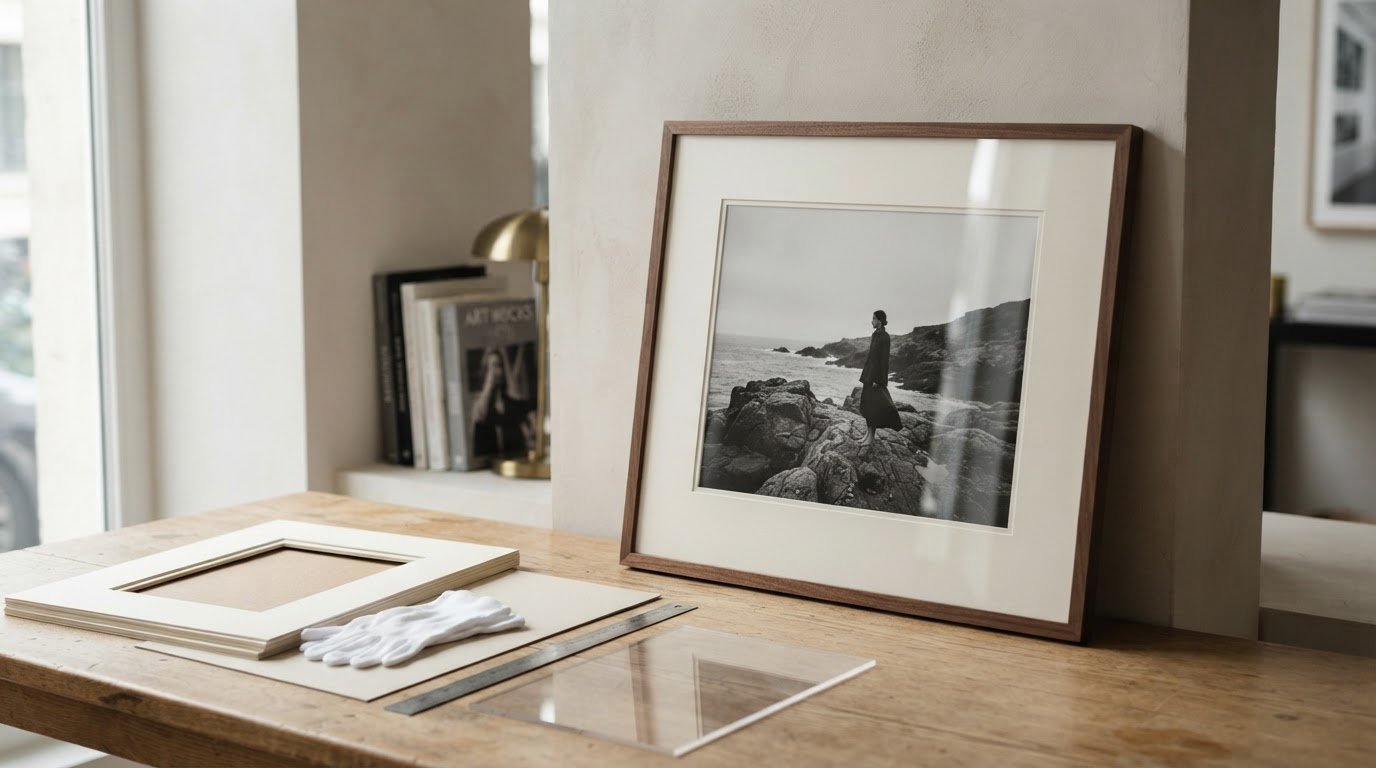
The mount, or mat, serves a dual purpose: aesthetic elevation and physical protection. Its primary function is to create a necessary air gap between the photograph and the glazing, preventing the print from adhering to the glass due to condensation. Industry standards dictate the use of 100% cotton rag or high-grade alpha-cellulose boards, which are naturally pH neutral. To achieve that definitive gallery feel, many curators utilize a weighted bottom mount, where the lower border is slightly wider than the top and sides, providing a visual anchor for the piece. Implementing these conservation framing techniques ensures that the artwork remains suspended in a safe, acid-free environment.

Understanding UV-Protective and Anti-Reflective Glass

Environmental light is a constant threat to photographic pigments. Research indicates that UV radiation is responsible for approximately 40% of the fading seen in art prints. To combat this, collectors must choose glazing that offers significant UV protection. While standard glass provides a basic barrier, museum-grade glazing blocks up to 99% of harmful rays while virtually eliminating reflections. This balance of protection and clarity is essential; you want to see the texture of the paper and the depth of the shadows without the distraction of a mirror-like glare. For larger pieces, high-quality acrylic is often preferred for its shatter resistance and lighter weight, provided it maintains those critical archival standards. If you’re looking to elevate a recent acquisition, exploring a bespoke framing service is the most reliable way to secure these premium materials.

Aesthetic Styles: Matching the Frame to the Photographic Era

The frame is far more than a simple border; it’s a stylistic extension of the image’s era and intent. A photograph captured in the 1960s carries a distinct energy that differs vastly from a contemporary Star Wars Limited Edition Print or a monochrome scene from our Music Archives. To master the art of framing fine art photography, one must align their choices with the principles outlined in our Fine Art Photography: A Curator’s Guide. This alignment ensures the frame honors the soul of the work rather than merely serving as a decorative afterthought. The choice of color is the first step in this curatorial journey. Stark black frames provide a definitive, modern edge that anchors an image, while gallery white offers a seamless, airy transition that suits minimalist interiors. Warm wood tones, such as hand-finished oak or walnut, evoke a sense of heritage and artisanal craftsmanship that complements historical subjects.

Materiality plays a significant role in the tactile experience of the art. While mass-produced composite frames often feel hollow and fragile, solid timber mouldings offer a weight and texture that signals prestige. This physical presence is essential for serious collectors who view their acquisitions as permanent fixtures. Selecting high-quality, sustainable wood ensures that the frame ages as gracefully as the photograph it protects. By employing sophisticated archival framing techniques, you ensure that these aesthetic choices are supported by the structural integrity required to preserve the work for decades.

The Slim Aarons Aesthetic: Mid-Century Elegance

For the vibrant, sun-drenched works found in the Slim Aarons collection, the framing must mirror the “aspirational” mood of the subject matter. Clean, minimalist frames in white or light, natural woods work best to preserve the sense of leisure and light. A wide, bright white mount is often the secret to success here; it acts as a visual buffer that allows the saturated turquoises of a poolside scene to pop. The goal is to make the piece feel as effortless and elegant as the high-society lifestyle Aarons famously documented.

Classic vs. Contemporary Framing Approaches

Monochrome archives, such as the iconic Terry O’Neill Photography, often demand the timeless ‘Black Box’ frame. This deep-profile style adds a three-dimensional quality, creating a shadowbox effect that draws the viewer into the celebrity’s gaze. Conversely, for vintage movie posters or Cinema Lobby Cards, a slightly more traditional moulding can echo the golden age of the silver screen. Modern collectors may also consider float-framing, a technique where the print appears to hover within the frame. This method is particularly effective for prints with deckled edges, as it highlights the physical nature of the paper itself, creating a sophisticated, gallery-standard display.

Proportions and Precision: The Art of Mounting and Sizing

Precision in measurement is the silent language of the gallery. When framing fine art photography, the relationship between the image and its border determines the piece’s perceived value. Many collectors make the mistake of choosing a frame that matches the print size too closely; this creates a claustrophobic effect that stifles the artwork’s narrative. Instead, professional curators often employ the golden ratio to calculate mount widths that provide perfect visual balance. By intentionally oversizing a mount, even a modest print gains a sense of immense prestige. It signals that the work is significant enough to command its own dedicated territory on the wall.

Large-format pieces present a different set of technical challenges. As the scale increases, the structural integrity of the frame becomes paramount. The weight of museum-grade glazing requires robust joinery to prevent bowing, which could otherwise cause the glass to touch the print. Achieving this level of precision requires artisanal expertise that mass-produced options simply can’t provide. When framing fine art photography at a significant scale, the frame must act as a rigid exoskeleton, protecting the print from the physical stresses of its own size.

The Impact of Border Width and Window Mounts

Wide borders are essential for creating ‘breathing room,’ allowing the viewer’s eye to settle on the subject without distraction. The ‘Museum Mount’, characterized by a significantly larger frame for a smaller print, remains a hallmark of luxury in the art world. It suggests a level of care and expense that elevates the entire room. A window mount is a protective and aesthetic buffer cut from archival board that sits over the print to provide depth and prevent glass contact. This technique ensures the print remains flat and secure, avoiding the unsightly waving that occurs when paper is pressed directly against a hard surface.

Achieving the Gallery Look in Residential Spaces

Scaling art to the dimensions of your room is vital for a harmonious interior. A large Star Wars Limited Edition Print might dominate a small study, while a series of smaller Cinema Lobby Cards requires consistent spacing to feel like a cohesive collection. Always aim for eye-level hanging, typically centering the work roughly 145cm from the floor to mirror professional standards. Lighting is the final touch; use directional LEDs to avoid hotspots on the glass that can obscure fine details. To ensure your collection is presented with this level of curatorial precision, you can select a bespoke framing option that is tailored to your specific space.

Bespoke Framing: The Galerie Prints Signature Approach

The final stage of acquisition shouldn’t be a logistical burden. While many collectors find the process of sourcing a frame after the print arrives to be a point of friction, our signature approach to framing fine art photography integrates the curatorial and technical processes into one seamless experience. We don’t view the frame as an add-on; it’s the final layer of the artist’s presentation. By utilizing a Bespoke Framing Service that operates in direct concert with our archives, we ensure that every physical print is delivered as a completed masterpiece. This artisanal, localized production stands in stark contrast to mass-produced mail-in services that often prioritize volume over the delicate technical needs of high-caliber art.

Hand-finished frames offer a level of durability that composite materials can’t match. Every corner is joined with precision, and every finish is applied by hand to ensure a depth of color and texture that complements the specific photographic era. This commitment to craftsmanship ensures that your investment is ready to hang the moment it arrives at your door, regardless of whether you’re in London, New York, or Sydney. Large-scale framed works require specialized handling during global transit, and our logistics team ensures that even the most substantial pieces are crated and shipped with the same level of care used by international galleries. It’s about providing peace of mind alongside prestigious art.

From Archive to Wall: A Seamless Journey

There’s a distinct advantage in having a curator oversee the final presentation of your collection. When you select a piece from our Star Wars Limited Edition Prints or our extensive Music Archives, our team understands the historical context and visual requirements of that specific work. We maintain a rigorous consistency across large-scale collections, ensuring that if you hang multiple works in a single space, the profiles and mounts match perfectly. This eliminates the guesswork for the collector and guarantees a professional result every time. We invite you to explore our bespoke framing service for your next acquisition to experience this integrated excellence firsthand.

Investment Value and Heritage

A professionally framed print is more than a decoration; it’s a legacy. While the initial print holds significant value, the meticulous process of framing fine art photography ensures the work retains its market appeal and physical integrity far better over time. The frame acts as a primary line of defense, protecting the photographic heritage for future generations. Our commitment to localized production and premium materials ensures that every piece we deliver is a lasting piece of history. By choosing artisanal craftsmanship over mass-market convenience, you’re investing in a heritage that will remain as evocative and prestigious decades from now as it is today.

Elevating Your Collection for the Next Generation

The final act of curation is a commitment to the future. By prioritizing archival materials and precise proportions, you ensure that your investment remains a vibrant window into the past rather than a fading memory. We’ve discussed how the right glazing and acid-free mounting create a sanctuary for your prints, while thoughtful aesthetic choices bridge the gap between historical heritage and modern design. Mastering the nuances of framing fine art photography is what transforms a personal residence into a private gallery of enduring significance.

Our Bespoke Framing Service removes the logistical friction from this journey, offering pieces that are hand-crafted by specialist artisans and delivered ready to hang. With professional mounting included with all bespoke frames and global secure shipping for framed artwork, your collection is protected from the moment it leaves our archive until it reaches your wall. It’s an invitation to give your acquisitions the prestigious stage they deserve. Discover our Bespoke Framing Service and complete your collection to begin building a legacy of beauty that will inspire for decades to come.

Frequently Asked Questions

What is the difference between standard and archival framing for photography?

Archival framing focuses on long-term preservation by utilizing chemically inert materials like 100% cotton rag matboard and pH-neutral adhesives. Standard options often contain lignin, which turns acidic and causes yellowing or “burning” of the paper over time. By contrast, museum-quality framing fine art photography creates a stable micro-environment. This ensures the physical integrity of the print remains untouched, protecting your investment from environmental degradation for many decades to come.

Does framing a photograph increase its value as a collectable?

A professionally framed piece often holds its value better because the frame acts as a primary guardian of the print’s condition. Collectors prioritize works that haven’t suffered from light damage or moisture. When you choose a bespoke service, you’re signaling that the work is a significant piece of heritage. This curatorial care transforms a simple print into a prestigious, gallery-standard asset that commands respect in the secondary art market.

What kind of glass is best for displaying fine art photography in a bright room?

For spaces with high natural light, museum-grade glass is the gold standard. It features an anti-reflective coating that virtually eliminates glare, allowing you to see the deep shadows and fine details without a mirror-like reflection. Crucially, it blocks up to 99% of UV radiation. Research shows UV rays cause 40% of fading in art prints, so this specialized glazing is essential for maintaining the vibrant colors of poolside scenes or historical portraits.

Why is a mount (mat) necessary for framed photography?

The mount, or mat, provides a vital physical barrier by creating a necessary air gap between the photograph and the glass. Without this space, condensation can cause the print to adhere to the glazing, leading to irreversible surface damage. Aesthetically, it offers “breathing room” that draws the eye toward the subject. Using wide, weighted mounts is a hallmark of luxury, giving even smaller prints a sense of immense prestige and quiet authority.

How do I choose the right frame color for a black and white photograph?

Monochrome archives, such as Terry O’Neill Photography, typically look best in a classic ‘Black Box’ frame. This deep-profile style adds a three-dimensional quality that anchors the image. If you prefer a more contemporary aesthetic, a crisp white frame offers a seamless transition to the wall. For historical pieces like Cinema Lobby Cards, warm, hand-finished wood tones like walnut can echo the era of the production, providing a sense of nostalgic elegance and artisanal craftsmanship.

Can I buy a frame separately for a print I already own?

Galerie Prints offers a Bespoke Framing Service as a dedicated add-on for our curated collections, including the Slim Aarons Collection. While we specialize in providing ready-to-hang physical prints from our own archives, serious collectors should always seek artisanal, localized production for any work they own. It’s vital to ensure that any separate frame you acquire meets museum-quality standards, as mass-produced options often lack the technical precision required for high-caliber visual art.

What are the risks of using a cheap, non-archival frame for high-end prints?

Cheap frames often use wood-pulp backing boards that release harmful gases as they age, leading to unsightly brown spots known as foxing. Non-archival adhesives can also cause permanent staining or waving of the paper. When framing fine art photography, cutting corners on materials invites environmental light and humidity to destroy the work’s soul. These risks aren’t just aesthetic; they can lead to restoration costs that far exceed the initial price of a professional frame.

How does Galerie Prints ensure the safety of framed art during shipping?

We treat every framed work as a piece of history. Our team uses specialized crating and secure global shipping to protect against the physical stresses of transit. Large-format framed works are packed with museum-quality materials to prevent glass breakage or frame bowing. This ensures that your acquisition arrives in perfect condition, ready for immediate display. We handle the technical logistics so you can focus on the wonder of your new gallery-standard masterpiece.